
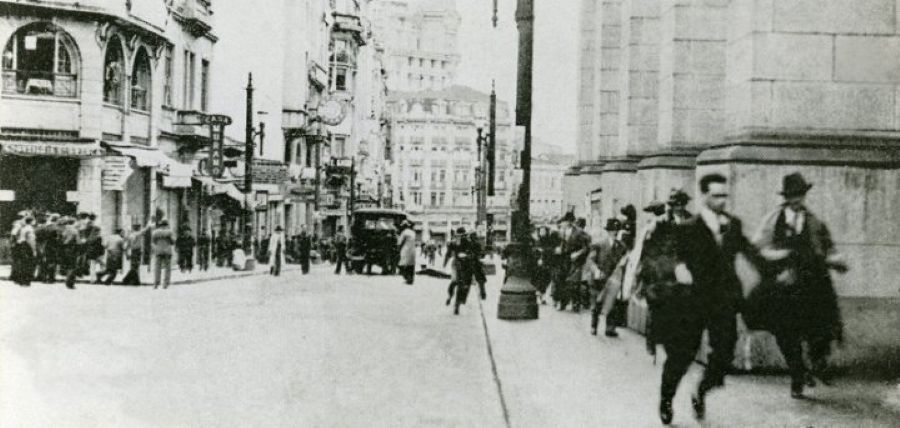
Antifascism in Brazil is a subject not often reflected upon by Brazilian historians, despite the country experiencing a surge of revolutionary anti-authoritarian sentiments during the 1930s. Motivated by the perceived threat to the Brazilian working class movement from an increasingly authoritarian State and from Integralismo (Brazil’s fascist movement), militants from different left-wing traditions attempted to organize a common framework of struggle against fascism.
The Vargas government, which came to power after a civil-military coup, promoted a more systemic and incisive form of State control over the working class. In exchange for labor laws and collective rights, the Vargas government demanded that labor unions be legalized within parameters that, in practice, sought to wipe out communism and anarchism from the workers’ movement. Parallel to this, the founding of the fascist Brazilian Integralist Action and the Nazi takeover of Germany, between 1932 and 1933, made it clear to parts of the working class movement that fascism was not merely an Italian phenomenon and that it was growing even in a country of such “late development”, as Brazil.
What followed was the breaking of a new battleground among the Brazilian left-wing, one which sought to define its main threats – be it the impending world war or fascism – and the best form of organizing the working class – be it as a united front of workers’ associations or as a front of independent workers. These questions were raised by a fraction of the Communist Party of Brazil (PCB, in the Portuguese acronym), then organized as a dissident group (trotskyites), who attempted to convince not only the PCB, but also anarchists and socialists that fascism was a real threat in Brazil and that the left-wing should gather beneath a single banner. This led to an intense struggle between different tendencies, who only managed to properly unite once, in what became a mythological event in Brazilian working class history. On October 7, 1934, in the heart of the city of São Paulo, a common front of communists, anarchists, and socialists, mobilized by the trotskyist-led Antifascist United Front, joined forces to repel the biggest gathering of integralist militants thus far. In what became known as “The Flight of the Green Chickens” (a humorous reference to the reported fact that many integralist militants fled and disposed of the green shirts that constituted their uniform), the antifascists succeeded in disrupting the integralist march after an armed clash which led to the death of a member of PCB’s youth.
It is undeniable that the counter-manifestation of October 7, 1934 was the biggest instance of unity among a heterogeneous working class movement. It also showed the potential of antifascism in mobilizing different political forces and convinced the PCB of the emergence of the fascist threat. Not long after that event, in 1935, the Party joined the National Liberation Alliance, an organization born out of the left-wing of a military revolutionary tendency whose objectives paired well with the communist tactics of “revolution in stages”. Fascism was, for the Alliance, one of three main enemies of the Brazilian “people,” alongside imperialism and latifundia.
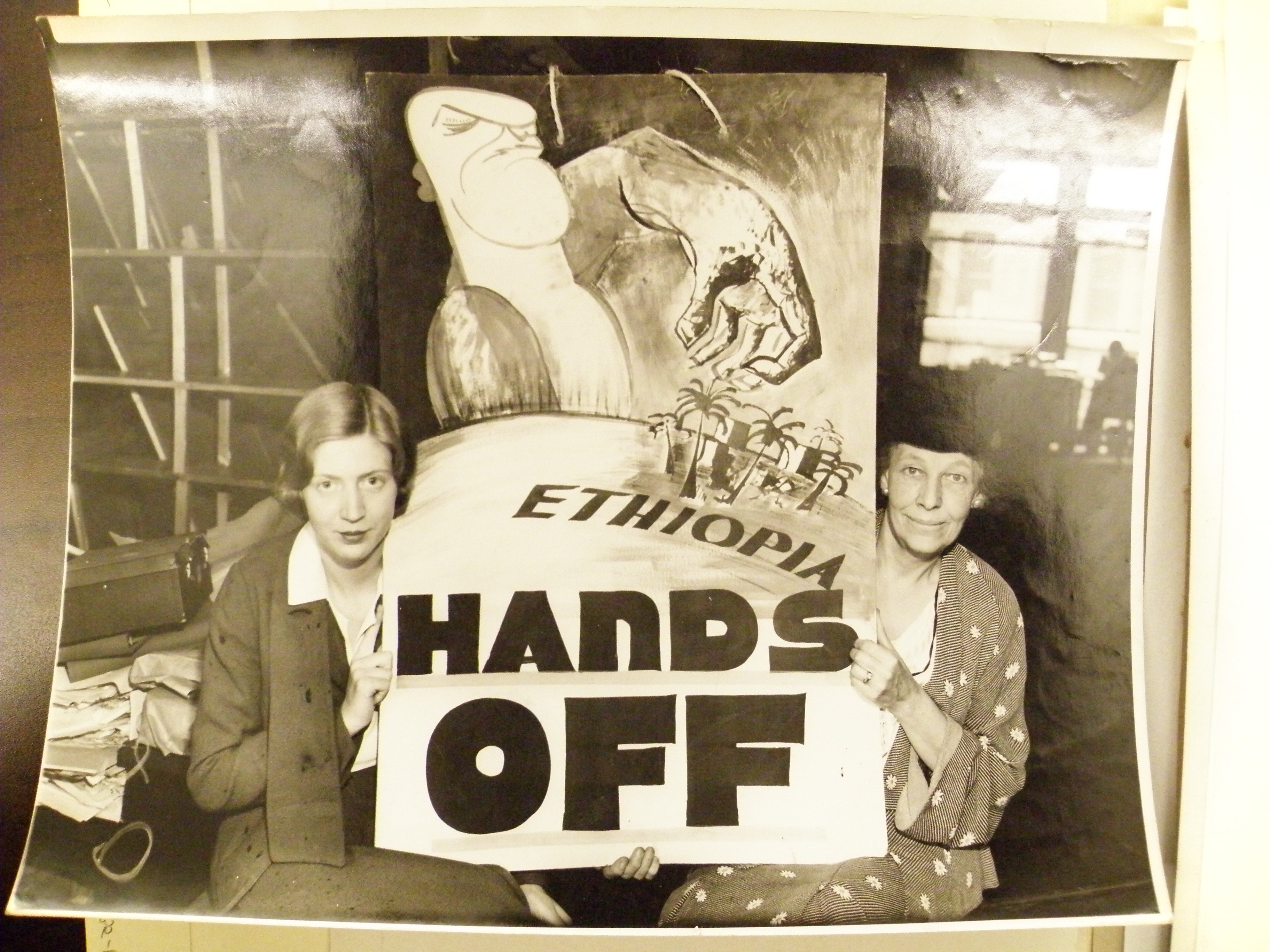
If antifascism is markedly a transnational movement, Brazil’s case is illustrative of this. Notwithstanding people such as Apolônio de Carvalho, who carried his prior experience along to Spain in 1936, Brazilian antifascists kept intense correspondence with their counterparts abroad and exiles, such as former MP of Italy Francisco Frola, found in Brazil a place to continue their struggles. Furthermore, Brazilian antifascists commemorated the date of the assassination of Giacomo Matteotti (a kind of “ritual” of transnational antifascism), translated writings of antifascists such as Carlo Rosselli, Stefan Zweig and Romain Rolland, covered the latter’s visit to Paraguay during the Chaco War and promoted a campaign against fascist Italy’s aggression against Ethiopia. Finally, the Brazilian antifascist press shared in the worldwide view of fascism as a drive towards political violence and authoritarianism, a backwards sort of ideology that seeked to plunge civilization into a new “Dark Age”.
Regardless of how one values the successes and failures of Brazilian antifascism, its struggles proved to be worthy of more than a footnote and its legacy still pokes its head out of the oblivion in which it was placed for many years. The publication, in 2014, of a new edition of a book about the counter-manifestation of 1934, along with a number of scholarly works about the subject, show that the history of Brazilian antifascism maintains a level of relevance in the present and is still capable of inspiring a whole new generation of people. Recent social movements, such as gig economy workers, football ultras groups and law enforcement collectives claim themselves as “antifascists” as a way of distancing themselves from far-right politics and of joining in a struggle against the ever present threats to Brazil’s contemporary democratic institutions.
To cite this article:
Giovani Bertolazi, ‘A Case for Revisiting Brazilian Antifascism,’ The Helsinki Notebooks, Vol. 1, No. 4 (1 Dec. 2024).
A Case for Revisiting Brazilian Antifascism by Giovani Bertolazi is licensed under CC BY-NC-ND 4.0





Leave a Reply